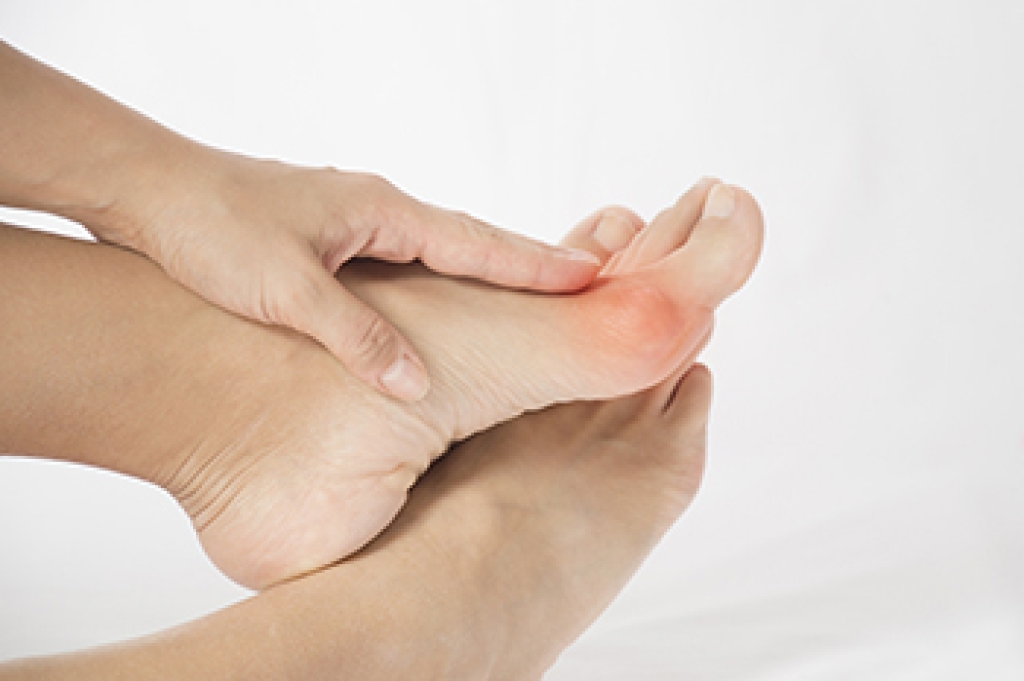
The Many Types of Heel Pain

The heels of the feet endure a great deal of stress and, therefore, are often open to pain and injury. The most common causes of heel pain are plantar fasciitis, Achilles tendonitis, bone spurs, and stress fractures. Heel bursitis, Sever’s disease, and Haglund’s syndrome are other causes that occur less frequently. Pain can be experienced behind the heel, within the bone itself, and under the heel. Simply stepping on a hard rock can cause pain under the heel, but the most common cause is plantar fasciitis. This is an overuse injury to the tissue that runs under the foot and connects the heel to the toes. Chronic plantar fasciitis can also lead to the development of heel spurs on the calcaneus, the main heel bone. Inflammation to the Achilles tendon from overuse is the most frequent cause of pain behind the heel. A podiatrist, a medical doctor who is trained in ailments of the feet and ankles, can diagnose the cause of heel pain by conducting a number of tests. These may include X-rays and electronic imaging tests. If you are suffering from heel pain and are unsure of the cause, it is suggested that you make an appointment with a podiatrist today.

Many people suffer from bouts of heel pain. For more information, contact Peter Siroka, DPM of Connecticut. Our doctor can provide the care you need to keep you pain-free and on your feet.

Causes of Heel Pain

Heel pain is often associated with plantar fasciitis. The plantar fascia is a band of tissues that extends along the bottom of the foot. A rip or tear in this ligament can cause inflammation of the tissue.

Achilles tendonitis is another cause of heel pain. Inflammation of the Achilles tendon will cause pain from fractures and muscle tearing. Lack of flexibility is also another symptom.

Heel spurs are another cause of pain. When the tissues of the plantar fascia undergo a great deal of stress, it can lead to ligament separation from the heel bone, causing heel spurs.

Why Might Heel Pain Occur?

  • Wearing ill-fitting shoes                
  • Wearing non-supportive shoes
  • Weight change           
  • Excessive running

Treatments

Heel pain should be treated as soon as possible for immediate results. Keeping your feet in a stress-free environment will help. If you suffer from Achilles tendonitis or plantar fasciitis, applying ice will reduce the swelling. Stretching before an exercise like running will help the muscles. Using all these tips will help make heel pain a condition of the past.

If you have any questions, please feel free to contact our office located in Stamford, CT . We offer the newest diagnostic and treatment technologies for all your foot care needs.


Read more about Heel Pain

Finding Your Shoes for Jazzercise

If you enjoy jazzercise, wearing comfortable and supportive shoes is important. It would be nice if they were attractive shoes, but that should take a back seat to be good for your feet and the activity you are participating in. Attention should be paid to arch support, so feet pronate or strike the floor and correctly distribute weight. If you are at a crossroads regarding the size of the jazzercise shoe, always go a half size up, as the foot will inch forward during high-impact exercise. Shoes should be flexible between the heel and the ball of the foot to accommodate the turns, twists, and jumps done in jazzercise. Also, look for lightweight, breathable shoes that provide support but do not restrict mobility for this activity. If you want assurance in selecting the proper shoes for jazzercise and your feet, it is suggested that you consult with a podiatrist who can help guide you.

It is important to find shoes that fit you properly in order to avoid a variety of different foot problems. For more information about treatment, contact Peter Siroka, DPM from Connecticut. Our doctor will treat your foot and ankle needs.

Proper Shoe Fitting

Shoes have many different functions. They cushion our body weight, protect our feet, and allow us to safely play sports. You should always make sure that the shoes you wear fit you properly in order to avoid injuries and deformities such as: bunions, corns, calluses, hammertoes, plantar fasciitis, stress fractures, and more. It is important to note that although a certain pair of shoes might be a great fit for someone else, that doesn’t mean they will be a great fit for you. This is why you should always try on shoes before buying them to make sure they are worth the investment. Typically, shoes need to be replaced ever six months to one year of regular use.

Tips for Proper Shoe Fitting

  • Select a shoe that is shaped like your foot
  • Don’t buy shoes that fit too tight, expecting them to stretch to fit
  • Make sure there is enough space (3/8” to ½”) for your longest toe at the end of each shoe when you are standing up
  • Walk in the shoes to make sure they fit and feel right
  • Don’t select shoes by the size marked inside the shoe, but by how the shoe fits your foot

The shoes you buy should always feel as good as they look. Shoes that fit properly will last longer, feel better, and improve your way of life each day.

If you have any questions please contact our office located in Stamford, CT . We offer the newest diagnostic and treatment technologies for all your foot and ankle needs.

Read more about Proper Shoe Fitting

2 Categories of Hyperhidrosis

Plantar hyperhidrosis is defined as excessive sweating of the feet. This condition is also referred to as polyhidrosis or sudorrhea, and it may affect more than one area of the body. It is often embarrassing and uncomfortable, and emotional well-being may become affected. This condition can fall into one of two categories. Excessive sweating from unknown causes may be classified as primary idiopathic hyperhidrosis and often occurs in only one area of the body. An underlying health issue such as gout, menopause or obesity may indicate secondary hyperhidrosis, which may cause distress in addition to existing conditions. Patients who have plantar hyperhidrosis may develop a fungal or bacterial infection of the feet, indicating the need to practice a good foot care routine. If you are afflicted with this condition, it is suggested that you consult with a podiatrist who can guide you toward relief and possible prevention techniques.

If you are suffering from hyperhidrosis contact Peter Siroka, DPM of Connecticut. Our doctor can provide the care you need to attend to all of your foot and ankle needs.

Hyperhidrosis of the Feet

Hyperhidrosis is a rare disorder that can cause people to have excessive sweating of their feet. This can usually occur all on its own without rigorous activity involved. People who suffer from hyperhidrosis may also experience sweaty palms.

Although it is said that sweating is a healthy process meant to cool down the body temperature and to maintain a proper internal temperature, hyperhidrosis may prove to be a huge hindrance on a person’s everyday life.

Plantar hyperhidrosis is considered to be the main form of hyperhidrosis. Secondary hyperhidrosis can refer to sweating that occurs in areas other than the feet or hands and armpits. Often this may be a sign of it being related to another medical condition such as menopause, hyperthyroidism and even Parkinson’s disease.

In order to alleviate this condition, it is important to see your doctor so that they may prescribe the necessary medications so that you can begin to live a normal life again. If this is left untreated, it is said that it will persist throughout an individual’s life.

A last resort approach would be surgery, but it is best to speak with your doctor to find out what may be the best treatment for you.

If you have any questions, please feel free to contact our office located in Stamford, CT . We offer the newest diagnostic and treatment technologies for all your foot care needs.

Read more about Hyperhidrosis of the Feet

Elderly Foot Care and Strokes

As an individual ages and becomes a senior citizen, they could be at risk of experiencing a stroke of some sort. Suffering from a stroke can have many different effects to be aware of. For example, one common symptom of having a stroke involves foot drop. Stroke survivors with foot drop essentially have a difficult time raising their foot because of the weakness in the muscles that are normally responsible for lifting it. As a result of living with foot drop, a senior might experience slowness when walking or even potentially pain. After walking a short distance, an individual with foot drop can also experience fatigue. If you are someone who has endured a stroke, then it is suggested that you schedule an appointment with a podiatrist. This foot specialist can help you address any issues you might be having with your feet. You can schedule an appointment with a trusted podiatrist today to address your foot problems.

Proper foot care is something many older adults forget to consider. If you have any concerns about your feet and ankles, contact Peter Siroka, DPM from Connecticut. Our doctor can provide the care you need to keep you pain-free and on your feet.

The Elderly and Their Feet

As we age we start to notice many changes in our body, but the elder population may not notice them right away. Medical conditions may prevent the elderly to take notice of their foot health right away. Poor vision is a lead contributor to not taking action for the elderly.

Common Conditions 

  • Neuropathy – can reduce feeling in the feet and can hide many life-threatening medical conditions.
  • Reduced flexibility – prevents the ability of proper toenail trimming, and foot cleaning. If left untreated, it may lead to further medical issues.
  • Foot sores – amongst the older population can be serious before they are discovered. Some of the problematic conditions they may face are:
  • Gouging toenails affecting nearby toe
  • Shoes that don’t fit properly
  • Pressure sores
  • Loss of circulation in legs & feet
  • Edema & swelling of feet and ankles

Susceptible Infections

Diabetes and poor circulation can cause general loss of sensitivity over the years, turning a simple cut into a serious issue.

If you have any questions, please feel free to contact our office located in Stamford, CT . We offer the newest diagnostic and treatment technologies for all your foot care needs.
Read more about Elderly and their Feet

The Feet Are Complex Structures

The feet carry the weight of the body, and they help to maintain balance. The heels and balls of the feet absorb the majority of the body’s weight. Proper balance can be achieved from the foot and leg muscles that provide stabilizing movements. Each foot consists of 26 bones that are connected by tendons and ligaments, which are part of the foot’s complex structure. The ankle connects the foot and lower leg bones and is divided into two categories, lower and upper ankle bones. The arch is responsible for absorbing impact from walking and similar activities and contains muscles, tendons, blood vessels, and nerves. The arch of the foot is measured in length and width, and there is constant tension as the muscles pull the bones together to create the arch. If you would like to have additional knowledge about the biomechanics of the feet, it is suggested that you confer with a podiatrist who can provide you with the information you are seeking.

If you have any concerns about your feet, contact Peter Siroka, DPM from Connecticut. Our doctor can provide the care you need to keep you pain-free and on your feet.

Biomechanics in Podiatry

Podiatric biomechanics is a particular sector of specialty podiatry with licensed practitioners who are trained to diagnose and treat conditions affecting the foot, ankle and lower leg. Biomechanics deals with the forces that act against the body, causing an interference with the biological structures. It focuses on the movement of the ankle, the foot and the forces that interact with them.

A History of Biomechanics

  • Biomechanics dates back to the BC era in Egypt where evidence of professional foot care has been recorded.
  • In 1974, biomechanics gained a higher profile from the studies of Merton Root, who claimed that by changing or controlling the forces between the ankle and the foot, corrections or conditions could be implemented to gain strength and coordination in the area.

Modern technological improvements are based on past theories and therapeutic processes that provide a better understanding of podiatric concepts for biomechanics. Computers can provide accurate information about the forces and patterns of the feet and lower legs.

Understanding biomechanics of the feet can help improve and eliminate pain, stopping further stress to the foot.

If you have any questions please feel free to contact our office located in Stamford, CT . We offer the newest diagnostic and treatment technologies for all your foot and ankle needs.

Read more about The Importance of Biomechanics in Podiatry

Connect With Us

scroll to top